

 By
By The pontiff warns that peace is “both a gift and a commitment” and urges prayer, reconciliation, and diplomacy amid a world wounded by conflicts.
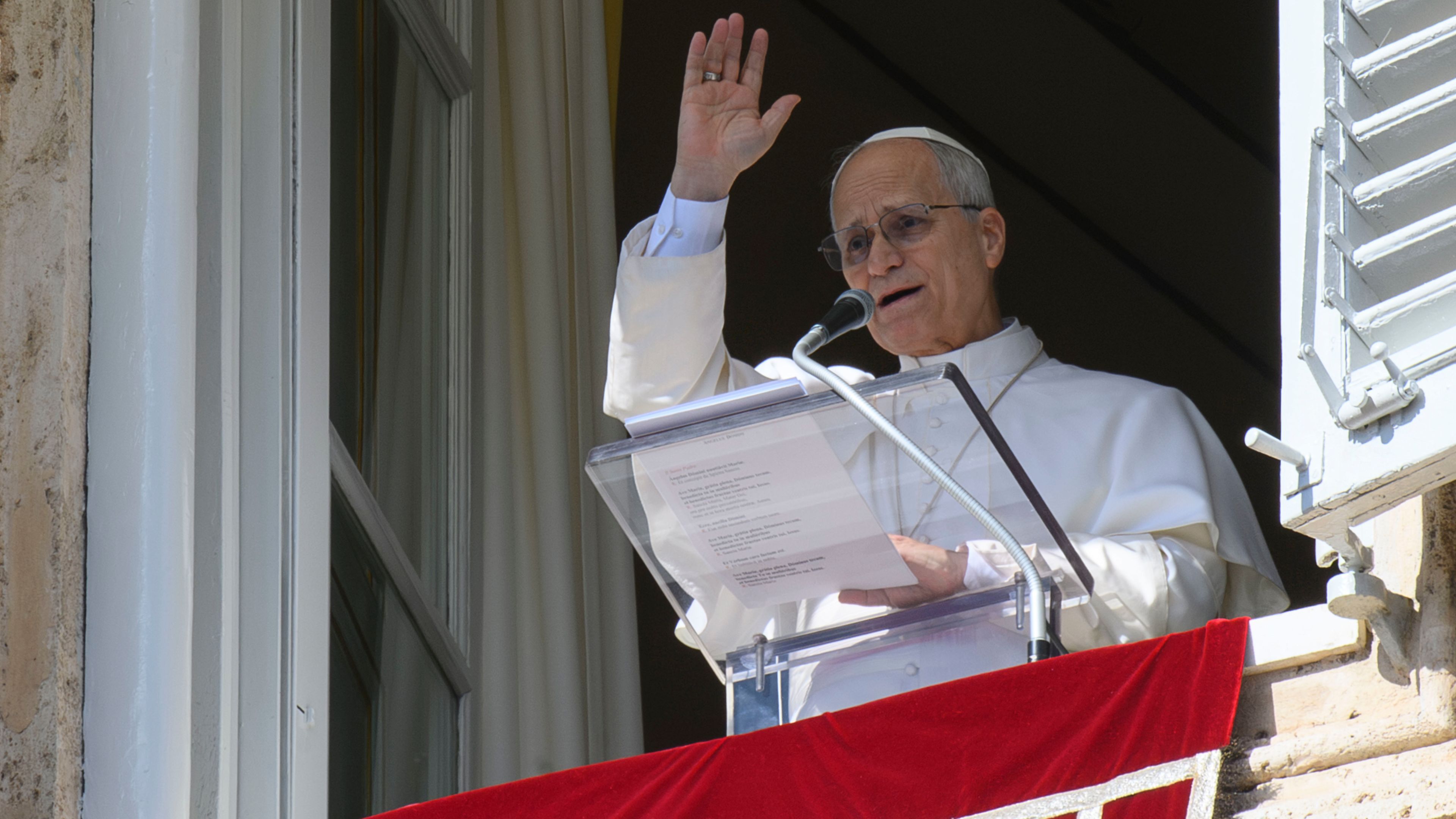
Pope Leo XIV warns in a new essay that “bitter nationalism tramples on the rights of the weakest” and says peace is first “defeated in the human heart” when people give in to selfishness, greed, and partisan interests.
The pope’s words come from a new introduction to the English-language edition of the book “Peace Be with You!”, published by HarperCollins, which is otherwise a collection of previously published papal texts.
“We live in a world wounded by too many conflicts and struck by bloody hostilities,” Leo writes. “Bitter nationalism tramples on the rights of the weakest.”
Calling peace “one of the great issues of our time,” the pontiff describes it as having a “dual dimension,” both vertical and horizontal: “a gift from God built by men and women throughout the ages” and also “a commitment and responsibility for each one of us.”
Leo says peace is a gift given through Christ’s birth in Bethlehem and through the risen Lord’s greeting to the disciples. Citing St. Augustine, he notes that the divine gift “calls into action the responsibility of our answer, of our ‘good will.’”
At the same time, he stresses that peace must be lived concretely. “Peace means teaching children to respect others and not to bully others when they play,” he writes. “Peace means overcoming our personal pride and making room for the other, in our family, at work, in sports.”
He adds: “Peace is when our heart and our life are inhabited by silence, meditation and listening to God; because God never blesses violence, he never approves of taking advantage of others, or of the frenzied abuse of the one Earth that is disfiguring creation, a caress of the Creator.”
The pope also addresses what he has called the “globalization of powerlessness,” encouraging believers to respond above all with prayer. “Prayer is an ‘unarmed’ force that that seeks only the common good, without exclusions,” he writes. “By praying, we disarm our ego and become capable of gratuitousness and sincerity.”
Leo insists that the struggle for peace does not begin on battlefields but within each person. “Moreover, our heart is the most important battlefield,” he writes. “It is there that we must learn the bloodless but necessary victory over the impulses of death and the tendencies toward domination: Only peaceful hearts can build a world of peace.”
He urges the cultivation of reconciliation in daily life, including “nonviolent workshops, places where suspicion of others can become an opportunity for encounter,” adding: “The heart is the source of peace: There we must learn to meet rather than clash with each other, to trust and not of mistrust, to listen and understand instead of closing ourselves to others.”
Finally, Leo says responsibility for peace extends beyond personal conversion to political and international leaders as well. “Finally, politics and the international community are responsible for facilitating the mediation of conflicts, utilizing the arts of dialogue and diplomacy,” he writes.
The pope concludes by turning again to St. Augustine and praying that God grant “the blessing grace of a just and lasting peace,” especially for “those who are most forgotten and who suffer the most.”
This story was first published by ACI Prensa, the Spanish-language sister service of EWTN News, and has been translated and adapted by EWTN News English.
If you value the news and views Catholic World Report provides, please consider donating to support our efforts. Your contribution will help us continue to make CWR available to all readers worldwide for free, without a subscription. Thank you for your generosity!
Click here for more information on donating to CWR. Click here to sign up for our newsletter.
Yes, in full agreement, and we also read that “[Pope Leo] stresses that peace must be lived concretely.” How to affirm legitimate nationhood without morphing into politicized national-ism? Above the personal level, what might this perplexity mean concretely at the level of “political and international leaders”– and institutional architecture?
HISTORICALLY, President Wilson’s dissenting Secretary of State, Robert Lansing, made the case that the League of Nations was defeated by the United States Senate largely because after World War I Wilson was willing to sacrifice German-held Shantung Peninsula (extorted in 1898) to Japan— rather than returning this territory to China. “Hypocrisy !” So much for consistent national “self-determination” for large and small, as expressed in Wilson’s Fourteen Points of Peace (Lansing, “The Peace Negotiations: A Personal Narrative,” 1921).
ELSEWHERE, others propose that Hitler was enabled to exploit the interwar vacuum in central Europe because the Austro-Hungarian Empire had been dismantled (rather than reformed). “Self-determination”— within a united and less monarchical federation?— was fragmented into a collection of nations each asserting a more vulnerable “autonomy”. First domino, the Sudetenland…
Among other lessons today, for institutional architecture, these two: the nations within the European Union must continue to rediscover uniting roots deeper than secular-ism and economics; and the Ukraine of today looks a lot like the German Sudetenland in 1938.
And, as for Putin’s Mother Russia, or the 7th-century and now multi-state Islamic umma, well…
Weak and strong are pilgrims on journey. Praying, singing, loving, helping, and supporting one another, we all march together to our cherished destination.
Isn’t the Vatican City State a nation? It has diplomats in major capitals and receives same. It has territorial boundaries that it protects. It has an elected leader – the Pope. It has a Secratary of State. It has coinage and stamps and governs itself by (Canon) law.
It would be nice if the Francine Popes were less consumed with politics.